
To that end, engineers at Los Alamos National Laboratory have developed Tamper Evident Containers (TEC) using 3D printing to create arbitrarily complex-shaped, three-dimensional, tamper-sensitive sensors within the walls of the container, along with analog and encrypted digital boards safely stored inside the TEC to permanently record the complete security history of the protected items.
“This new technology introduces a paradigm shift in the tamper-evident container industry as the container itself is tamper-sensitive,” said John Bernardin, principal investigator for the project at Los Alamos.
Unlike putting an alarm on a vault door, or a seal on a container lid, the entire TEC is sealed and alarmed and gives custodians of sensitive materials real-time, actionable information regarding the security of materials susceptible to tampering.

“A single seal at the top of a container is not enough when it comes to protecting assets that are susceptible to tampering,” said Alessandro Cattaneo, an R&D engineer at Los Alamos. “Securing assets within a TEC offers individuals and organizations responsible for those assets with a real-time, reliable security history of the item inside.”
TECs can end up built to accommodate the security needs of a wide variety of public and private customers. Assets susceptible to tampering come in all shapes and sizes – a bottle of pills, a file containing pages of forensic evidence, a large work of art, valves in a chemical process. Therefore, a TEC can end up printed according to customer specifications.
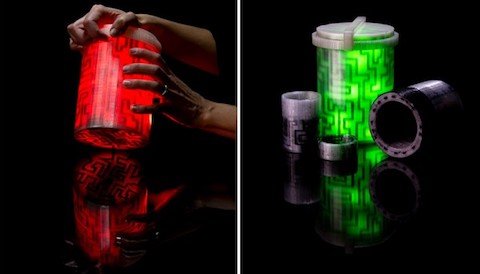
Tamper Evident Containers developed permanently record the complete security history of the protected items inside. It is sealed and alarmed and gives custodians real-time, actionable information on susceptible materials.
Source: Los Alamos National Laboratory
3D printing technology provides the TEC with several additional advantages, according to Bernardin. The containers can be manufactured in an almost limitless variety of sizes and shapes. The manufacturing process uses readily available and affordable materials, and can occur in a relatively short amount of time. And, most importantly, each container can have a unique encryption both physically and functionally.