
The employer requested this visit to evaluate noise exposures for the operator of a block making machine and to receive recommendations on controls to reduce noise exposures for this employee and other workers in the immediate area of this machine.
During the consultation visit, the consultant conducted noise sampling using a personal noise dosimeter to capture the noise exposure for the operator of the block making machine. Initial noise monitoring found the operator was exposed to an 8-hour time-weighted average (TWA) of 98.4 decibels A-scale (dBA).
Based on the consultant’s recommendations, the company had the operator wear double hearing protection (earplugs with a Noise Reduction Rating (NRR) of 33 and muffs with an NRR of 30) to protect the worker from this occupational noise hazard. NRR is a unit of measurement used to determine the effectiveness of hearing protection devices in decreasing sound exposure within a given working environment.

In addition to this personal protective equipment, the employer instituted engineering controls by installing noise reducing shields on the block maker.
These shields were made from ⅜-inch-thick plexiglass with 3-inch-thick acoustical foam, placed between the block making machine and the operator’s position. The shields were lightweight and easily removable to facilitate mold changes and other work on the block maker.
After the installation of these engineering controls, follow-up noise monitoring using noise dosimeters found that the operator’s full shift TWA exposure dropped significantly from 98.4 to 92.0 dBA with the shields installed.
In an effort to reduce the noise levels further, the company is continuing to work with the New York On-Site Consultation Program on additional improvements to the noise shields and other engineering controls.
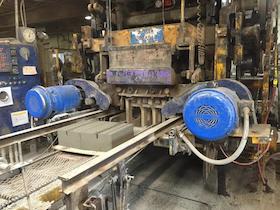
Block maker without noise shields
That is just one example of how the Occupational Safety and Health Administration On-Site Consultation Program offers no-cost and confidential occupational safety and health services to small and medium-sized businesses in all 50 states, the District of Columbia, and several U.S. territories, with priority given to high hazard worksites.
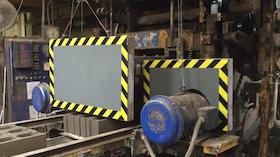
Block maker with noise shields installed