
One city looking to advance as a smart city is Russia’s St. Petersburg. The city is actively participating in establishing a “Smart City” program, which will provide new services for residents, while increasing the safety and security of citizens. To do that, though, digital services are essential.
Due to the Internet of Things (IoT) systems, the environment can adapt to the needs of humanity on its own accord. However, security threats are especially dangerous for the infrastructure.
Scientists note the new goal for cybercriminals is to disrupt the functioning of large enterprises and urban infrastructure, as well as is to intercept the control over them. The attackers using wireless links can remotely invade into the target subnet or device (a group of devices), intercept traffic, launch denial of service attacks, and take control of IoT devices to create botnets.

“Currently, traditional cyber risk analysis strategies can’t be directly applied in the construction and assessment of digital infrastructures in a Smart City, because the new network infrastructure is heterogeneous and dynamic. The goal of our project is to ensure the level of the information assets security considering the specifics of modern cyber threats,” said researcher Vasily Krundyshev at the Institute of Cybersecurity and Data Protection SPbPU.
There are specific issues for the cybersecurity risk assessment in a mobile inter-device network of the smart city:
- A huge amount of data for knowledge processing
- An undefined number of assets: users, connected nodes, communications
- Insufficient formalization of the risk calculus and the requirement for the regular risk expertise
- The inability of the detailed risk analysis in the case of the limited awareness of the smart network hosts about the current state of the cyberattacks
- Incomplete and inaccurate rules for statistical data calculations to obtain a probability of the cybersecurity risk events
Researchers of St. Petersburg Polytechnic University developed a methodology for analyzing cybersecurity risks, which includes the stages of identifying asset types, identifying threats, calculating risks, and analyzing the resulting risk values.
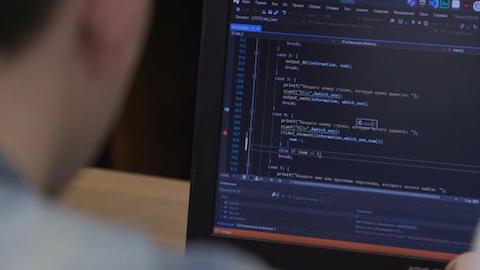
Russian scientists developed a methodology for assessing cyber risks in intelligent systems of a Smart City.
Source: Peter the Great St. Petersburg Polytechnic University
The proposed methodology is based on a quantitative approach, at the same time it is easily and quickly computable, which is especially important for the functioning of modern dynamic infrastructures. Experimental studies using a set of developed simulation models of typical digital infrastructures of a Smart City (Internet of Things, smart building, smart crossroads) demonstrated the superiority of the approach proposed by the authors over existing analogs.
“Our work presents a neural network approach to assessing cybersecurity risks,” the paper’s authors said. “Using the network simulator, it was possible to recreate the dynamic network infrastructure of a smart city. Modeling scenarios were developed, and five types of network attacks were implemented. From the data obtained in the course of modeling, a dataset was prepared, including network characteristics and economic characteristics. All assets were typed, and a threshold of the acceptable level of risk was determined for each asset type. A neural network model was developed, namely a three-layer perceptron, which was trained on labeled data, and then the classification quality was assessed on unlabeled data. The test results showed an accuracy of 98–99%, which speaks of the promise of the proposed approach. The main advantages of the proposed approach are the ability to work in rapidly changing conditions, high classification accuracy when working with big data, the possibility of dynamic risk assessment, as well as the ability to work in conditions of limited awareness of the state of the entire smart city network.”
In the near future, it is planned to arrange the automatic calculation of cybersecurity risks in a Smart City based on the developed methodology.
Click here to view the entire paper in the scientific journal “Machines.”