
Pikes Peak Steel, LLC, is a structural steel fabrication plant, located in Colorado Springs, Colorado. The company provides steel products to commercial contractors in the western United States and to homebuilders in Colorado Springs and the surrounding region.
Their products range from beams, saddles, railings, and stairs to structural steel and bridges.
Initially, the company was competing for large projects, but it was plagued with injuries. At one point, their total recordable case (TRC) and days away, restricted, and transferred (DART) rates were 20.0 and 10.0, respectively. These high injury rates led to expensive workers’ compensation insurance premiums and other direct and indirect costs.
Pikes Peak Steel knew they needed to lower these costs.

In 2005, the company invited Colorado State University (CSU) OSHA Consultation Services consultants to conduct a safety and health survey of their facility. It was then when Glen Carter, the company owner, made the decision to focus on safety in the same way he approached quality. The consultants did not know it at the time, but this visit would be the starting point of what would become an successful safety story.
Training a Good Start
In the beginning, the company focused on what it knew: Training programs and hazard analysis. The consultants from CSU OSHA Consultation Services were crucial at this stage. They guided Pikes Peak Steel through what needed to be done and how to do it. The consultants acted as coaches and provided technical advice and support. With their help, Carter developed new safety policies and programs. He discussed the goals of these new programs with his key personnel and stated, “When the company owner cares, everybody cares.” This approach created a focus and uniform effort to get all personnel working in the same direction.
In 2008, Pikes Peak Steel earned its first Occupational Safety and Health Administration (OSHA), Safety and Health Achievement Recognition Program (SHARP), award and demonstrated that when businesses make workplace safety a priority, people take notice.
Since then, the company has consistently participated in SHARP. This program recognizes small business employers who have used OSHA On-Site Consultation Program services and operate exemplary safety and health programs. Acceptance into SHARP is an achievement of status that singles the company out among its business peers as a model for worksite safety and health.
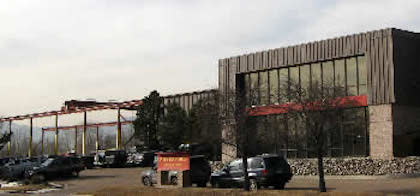
Pikes Peak Steel thinks “Safety is a requirement and quality is a goal.”
The OSHA On-Site Consultation Program offers no-cost and confidential occupational safety and health services to small and medium-sized businesses in all 50 states, the District of Columbia, and several U.S. territories, with priority given to high-hazard worksites. On-Site Consultation services are separate from enforcement and do not result in penalties or citations. Consultants from state agencies or universities, such as CSU OSHA Consultation Services, work with employers to identify workplace hazards, provide advice for compliance with OSHA standards, and assist in establishing and improving safety and health programs.
Positive Experience
Participating in SHARP was positive reinforcement and provided the incentive for continued improvement.
“With the help of the CSU consultants, the safety program continued to evolve,” Carter said. He viewed the initial SHARP certification as “the critical step in the company’s safety successes.”
Pikes Peak Steel has since achieved several incredible milestones:
• Five consecutive SHARP participant renewals, most recently in March 2019. Today, the company boasts a workplace safety program that has incurred only one recordable injury in over 7 years (353,000 hours). To participate in SHARP, a company must have injury and illness rates below the national average. From 2015 through 2017, Pikes Peak Steel’s total recordable case (TRC) rate was 1.3, and their days away, restricted, and transferred (DART) rate was 1.3. During this period for NAICS code 332312, the Bureau of Labor Statistics reported that the industry average TRC rate was 5.23, and the industry average DART rate was 2.63. For 2018, Pikes Peak Steel’s TRC and DART rates returned to zero. This successful record has occurred despite the inherently dangerous nature of the steel fabrication industry.
• Eight safety honor awards from the American Institute of Steel Construction, recognizing their outstanding safety program. They received their most recent award in 2018.
• Six consecutive “Circle-of-Safety Awards” from Pinnacol Assurance, their worker’s compensation insurance carrier, the largest provider in the state of Colorado. Pikes Peak Steel earned their most recent award in 2018. With more than 57,000 worker’s compensation customers, Pinnacol recognizes less than one-tenth of one percent of its clients with their “Circle-of-Safety Award.”
Pikes Peak Steel saw immediate benefits from their new safety policies and programs. For example, earning the American Institute of Steel Construction certification allowed the company to compete for larger projects statewide. Dedication to workplace safety and quality fabrication lowered their facility error rate to 0.035 percent while simultaneously keeping injury rates low.
Carter continues to emphasize the safety program and the quality program. The company has experienced an ongoing transformation in safety and quality and focuses on these two goals as a single unit. From his point of view, safety and quality are indistinguishable functions of personnel and leadership. They are goals and measurements of performance by the company’s personnel. Pikes Peak Steel has acknowledged this fact with their motto, “Safety is a requirement and quality is a goal.”