
There are approximately 52,000 community water systems and approximately 16,000 wastewater systems in the United States. Among these utilities are a wide range of capabilities and capacities for cybersecurity enhancement. Many are subject to economic disadvantages typical of rural and urban communities. Others do not have access to a cybersecurity workforce.
Operating in the background is the idea these utilities are struggling to maintain and replace infrastructure, maintain revenues while addressing issues of affordability, and comply with safe and clean water regulations.
With all that in mind, threats from increasingly sophisticated and destructive attackers show cybersecurity has become a top priority for water and wastewater systems. The most recent incidents added urgency to discussions within the sector and with Congress and in federal agencies on how best to help utilities improve their cybersecurity.
To help guide discussions with policymakers and to inform the sector’s own cybersecurity programs, the Water Sector Coordinating Council (WSCC) – an advisory body comprising the national water and wastewater associations, the sector’s research foundation and WaterISAC – collaborated on a utility survey to develop a picture of current cybersecurity practices in the sector to better articulate the challenges and needs of the sector.

This voluntary survey was distributed to utilities across the country by the nation’s water and wastewater associations. The results represent a first-of-its-kind snapshot of the Water and Wastewater Systems Sector cybersecurity posture.
The survey, conducted in April, resulted in 606 responses from water and wastewater utilities. The results show a range of cybersecurity preparedness levels across the sector, with many excelling in their efforts with current resources but with others demonstrating room for improvement and a need for greater support.
Despite the dire reaction regarding water facility cybersecurity (or lack thereof), some of the results from the survey found 23.38 percent of systems surveyed perform cybersecurity risk assessments annually, while 7.61 percent of systems are conducting quarterly cybersecurity risk assessments and five percent of systems are conducting weekly cybersecurity risk assessments.
On top of that, over half of the systems surveyed (57.96 percent) have a risk management plan that addresses cybersecurity.
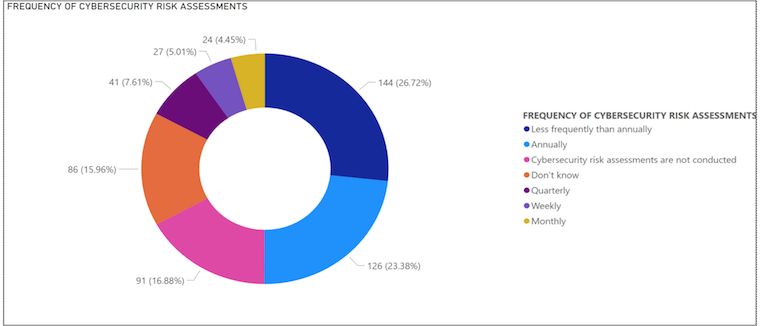
Source: Water Sector Coordinating Council
In addition, the top three challenges by primary service include:
- Combined drinking water and wastewater systems: 1. minimizing control system exposure; 2. assessing risks; 3. identifying and remediating hardware or software vulnerabilities.
- Drinking water systems: 1. assessing risks; 2. awareness of cybersecurity threats and best practices; 3. planning for emergencies, incidents and disasters.
- Wastewater systems: 1. minimizing control system exposure; 2. securing remote access to the OT system; 3. assessing risks.
In addition, the number one challenge for systems serving more than 100,000 is creating a cybersecurity culture within the utility.
Click here for additional information on the report.