
Just over a year ago deficiencies associated with the fire tubes of multiple vessels during an annual inspection of an offshore production platform ended up discovered.
As a result of the discovery of the problems, inspectors from the Bureau of Safety and Environmental Enforcement (BSEE) issued an Incidents of Noncompliance.
The failures occurred because the flange faces of the flame arrestor housings were not flush, which is essential to its function. The resulting gap allowed the potential for flame migration to occur from the firing chamber to the Class I Division 2 Hazardous environment directly outside the process component.
The fire tubes for the heater treater and glycol reboiler units ended up removed, inspected, and reinstalled a month prior to the arrival of BSEE inspectors. The fasteners (i.e. nuts and bolts) used for the reinstallation in September 2019 were not original equipment manufacturer (OEM) parts and therefore, not compatible with the vessels. Despite the improper reinstallation, the vessels were brought back online and production continued.
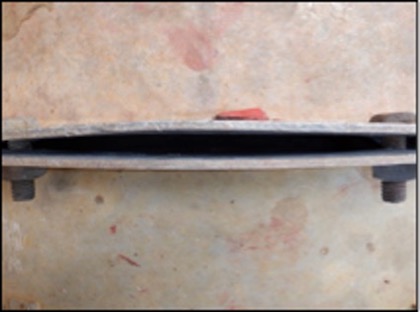
At the time of BSEE’s inspection, flange faces were visibly warped and a gap in the flange created a path for flame migration due to the insufficient fastener assembly.

A gap in a heater treater flange is shown with no gasket.Source: BSEE
At the time of BSEE’s inspection, flange faces were visibly warped and a gap in the flange created a path for flame migration due to the insufficient fastener assembly.
After the inspection, BSEE decided to issue an alert for operators and contractors to consider the following issues:
- Create a fit for purpose Pre-Startup Review when disassembling equipment for routine maintenance to verify proper reinstallation procedures are implemented appropriately prior to returning equipment online
- Ensure only OEM recommended parts are applied to their associated equipment rated for a specific service
- Increase visual inspection frequencies of flame arrestors to ensure an adequate flange face seal is intact
- Examine the fit and make-up of all parts around the flame arrestor housing during any maintenance that disturbs OEM connections in order to eliminate any flow path around the fired component that would negate its efficacy