
Inspections by the Bureau of Safety and Environmental Enforcement (BSEE) discovered exceptionally poor living conditions that exposed offshore personnel to biological hazards.
In one case , in February 2021, BSEE inspectors noticed a drainage system of buckets and hoses coming from the ceiling. Upon further inspection of the living quarters, the inspectors found blackwater, greywater, and rainwater leaks in several areas. In addition to these leaks, mold was present in the upstairs sleeping quarters. The facility was subsequently unmanned following the discovery of these poor conditions.
In another instance, in March 2021, on a separate facility, BSEE inspectors smelled a noxious odor stemming from many areas covered in mold and mildew in the living quarters. Past water leaks rendered most of the cabinetry unusable. Inspectors also noted the operator had to order multiple mattresses to replace ones that were getting wet due to water migration down to the first floor. The facility was subsequently unmanned following the discovery of these poor conditions.
BSEE regulations require operators to control immediately, remove, or otherwise correct any hazardous oil and gas accumulation or other health, safety, or fire hazard.

Mold and mold spores can cause adverse health effects by producing allergens (which cause allergic reactions), irritants, and in some instances, potentially toxic substances (mycotoxins). Moisture control is key to controlling mold growth. Mold can grow on virtually any material if water, oxygen, and an organic source are present. When water leaks or spills and is not corrected, mold growth is likely to occur.
In addition to mold and contaminated water, other examples of biological hazards to be aware of in offshore environments include animals, bacteria, viruses, bloodborne pathogens, and improperly handled food.
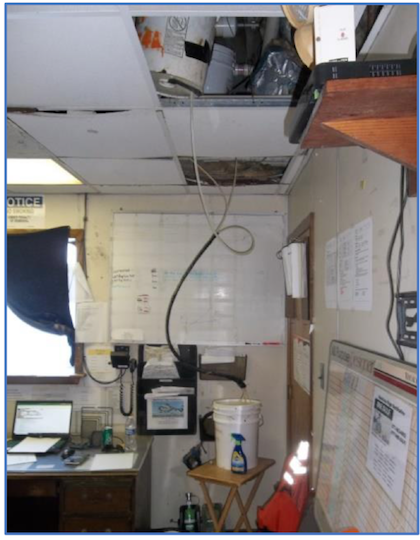
Buckets used as a drainage system.Source: BSEE
After the investigations, BSEE recommends operators consider:
- Periodically inspecting site conditions to verify no leaks or water damage are present
- Verifying proper water and drainage systems are in place to prevent leaks and avoid potentially exposing personnel to hazardous materials
- Repairing plumbing or structural leaks and restore any damaged areas as soon as possible to prevent mold formation
- Maintaining good ventilation in areas where moisture may accumulate (e.g., shower facilities, galleys)
- If potential biological hazards are identified on facilities, personnel should be removed from the affected areas and evacuated if adequate accommodations are not available
- Remediating any problem areas discovered by correcting the moisture problem and removing any contaminated materials to prevent exposure to personnel and any additional damage to building materials
- Wearing proper Personal Protective Equipment when working to remove these materials
- Any person may report any hazardous or unsafe working condition on any facility engaged in OCS activities to BSEE
- Referencing the Occupational Safety and Health Administration’s (OSHA) (2006) “Preventing Mold-Related Problems in the Indoor Workplace” guide and OSHA’s
- Safety and Health Information Bulletin (SHIB 03-10-10) “A Brief Guide to Mold in the Workplace” for recommendations to prevent and remediate mold hazards
- The use of dehumidifiers to reduce the formation of mold and mildew