
With the A2B system still in bypass, the platform crane operator positioned the crane boom over the helideck where it could be inspected.
A certified crane mechanic determined the cable holding the A2B weight and the eyelet on the wireless A2B sensor was broken. A spare wireless A2B sensor was found at another facility and installed that same day to get the crane back in service, according to a report from the Bureau of Safety for Environmental Enforcement (BSEE).
While the crane was working later the same day, the crane operator watched the A2B weight fall again and the A2B system alarmed. Once again, the crane operator placed the A2B system in bypass, hoisted the auxiliary line up without a load attached, and placed the crane boom over the heliport for another inspection by the crane mechanic. It was discovered that the A2B weight was carried into the boom tip and damaged the sheave and auxiliary cable. The crane was subsequently placed out of service.
An investigation by the operator concluded a protruding broken strand carried the A2B weight on the auxiliary cable and into the boom tip sheave. The operator reported the A2B alarm was bypassed during both lifting incidents.

Almost a year prior, on a nearby facility managed by the same operator, a platform crane was being used to lift a toolbox weighing approximately 3,400 pounds, at which time the 10.6-pound wireless A2B sensor for the auxiliary line fell off the crane boom. The A2B weight slid down the auxiliary line cable and landed on the ball. The 14-inch section of chain that supports the A2B weight from the wireless A2B sensor fell and struck the level safety high switch on a separator that tripped and shut down the facility.
As a corrective action to this incident, the operator removed chains and installed retention cables from the wireless A2B sensor to the weight. This change was also implemented on other platform cranes where chains were installed. The annual crane inspection conducted several months before the Dec. 31, 2021, incident revealed the A2B system worked but after the chains were removed and cables installed, the wireless A2B sensor would trip when mostly loading and unloading boats. This finding was noted as a recommendation instead of deficiency and was not corrected prior to the incident.
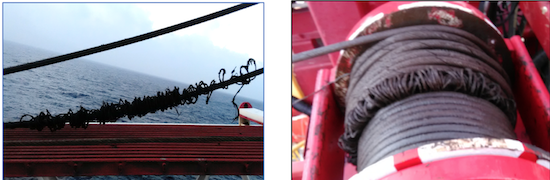
A damaged auxiliary line on left and a damaged auxiliary line boom tip sheave on right.
Source: BSEE
An Anti-two Block protects hoist ropes, structural components and machinery from damage that may occur when two sheave groups such as the load block and boom tip, come into contact as the hoist cable is drawn in.
Although this incident is still under investigation, BSEE recommends operators and contractors consider the following:
Listing malfunctioning safety devices as an unsafe condition on inspection reports.
Conducting a thorough crane inspection of all components before bypassing any crane safety system due to an alarm.
Carefully monitoring all components when safety devices are in bypass for inspection, testing and maintenance.
Taking the crane out of service, or restrict its operations, to eliminate an unsafe condition if deficiencies are known.
Consulting and following manufacturer recommendations prior to changing or replacing crane components that differ from the original design.
Ensuring a Management of Change (MoC) is conducted and the impacts to operability are understood and mitigated when changing components on the crane and other material-handling equipment.
Ensuring the crane, its boom, and other components are inspected visually before each use. Methods include but are not limited to physical inspections, binoculars, cameras etc., in addition to annual crane inspections.
Ensuring compliance with the requirements listed in 30 CFR 250.108 – cranes and other material-handling equipment.
Ensuring during lifting operations that safety devices and systems on cranes and other material-handling equipment are not intentionally bypassed or overridden without appropriate authorization, communication, and oversight.
Promoting the topic of crane safety during Health, Safety and Environment (HSE) meetings.
Updating the crane manuals, and procedures to reflect the use of cables instead of chains. Adjust inspection and maintenance procedures if appropriate to account for the use of cables.
Training personnel in crane risk assessments and change management or offer refresher courses on the topic.
Reviewing Safety Alert 332 for recommendations regarding crane hazards identified by BSEE in Risk Based Inspections.