
Lanthanide metals are non-radioactive and positioned one row above actinides on the periodic table. That helps because uranium dioxide, a radioactive actinide oxide, is the most widely used nuclear fuel in today’s nuclear power plants.
“Actinide nitride fuels are potentially a safer and more economical option in current power-generating systems,” said Bi Nguyen, Los Alamos National Laboratory Agnew postdoc and lead author of research just published in the journal Inorganic Chemistry.
Actinide nitride fuels would provide more safety and sustainability because of their energy density, offering up more energy from less material, as well as better thermal conductivity – allowing for lower temperature operations, giving them a larger margin to meltdown under abnormal conditions.

Actinide nitrides, however, are very challenging to make and the production of large amounts of high purity actinide nitrides continues to be a major impediment to their application. Both actinides and lanthanides are at the bottom of the periodic table and potential methods to make actinide materials are typically first tested with the lanthanides because they behave similarly, but are not radioactive.
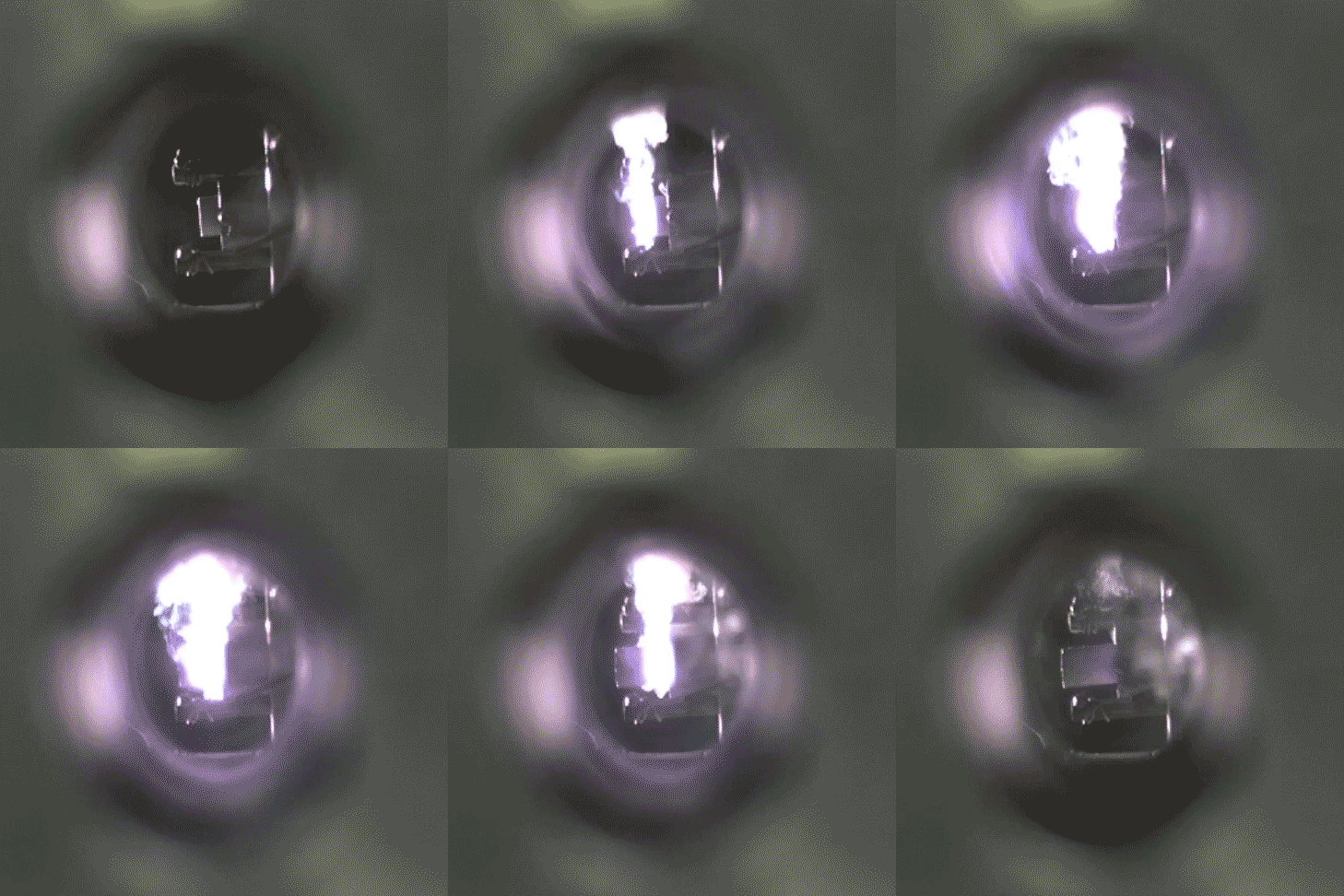
Combustion synthesis of LnBTA compound.Source: Los Alamos National Laboratory
Los Alamos National Laboratory and Naval Research Laboratory scientists discovered that LnBTA [lanthanide bis(tetrazolato)amine] compounds can end up burned to produce high-purity lanthanide nitride foams in a technique called combustion synthesis. This method uses a laser pulse to initiate dehydrated LnBTA complexes, which then undergo a self-sustained combustion reaction in an inert atmosphere to yield nanostructured lanthanide nitride foams.
LnBTA compounds can end up easily prepared in bulk and their combustion is readily scalable. There is an ongoing collaboration between the Laboratory’s Weapons Modernization and Chemistry divisions to examine actinide analogues for combustion synthesis of actinide nitride fuels.
Click here to view the paper.